The OIG’s Oversight of the
U.S. Postal Service’s
Delivering for America Plan
Volume 3.0
U.S. Postal Service Office of Inspector General




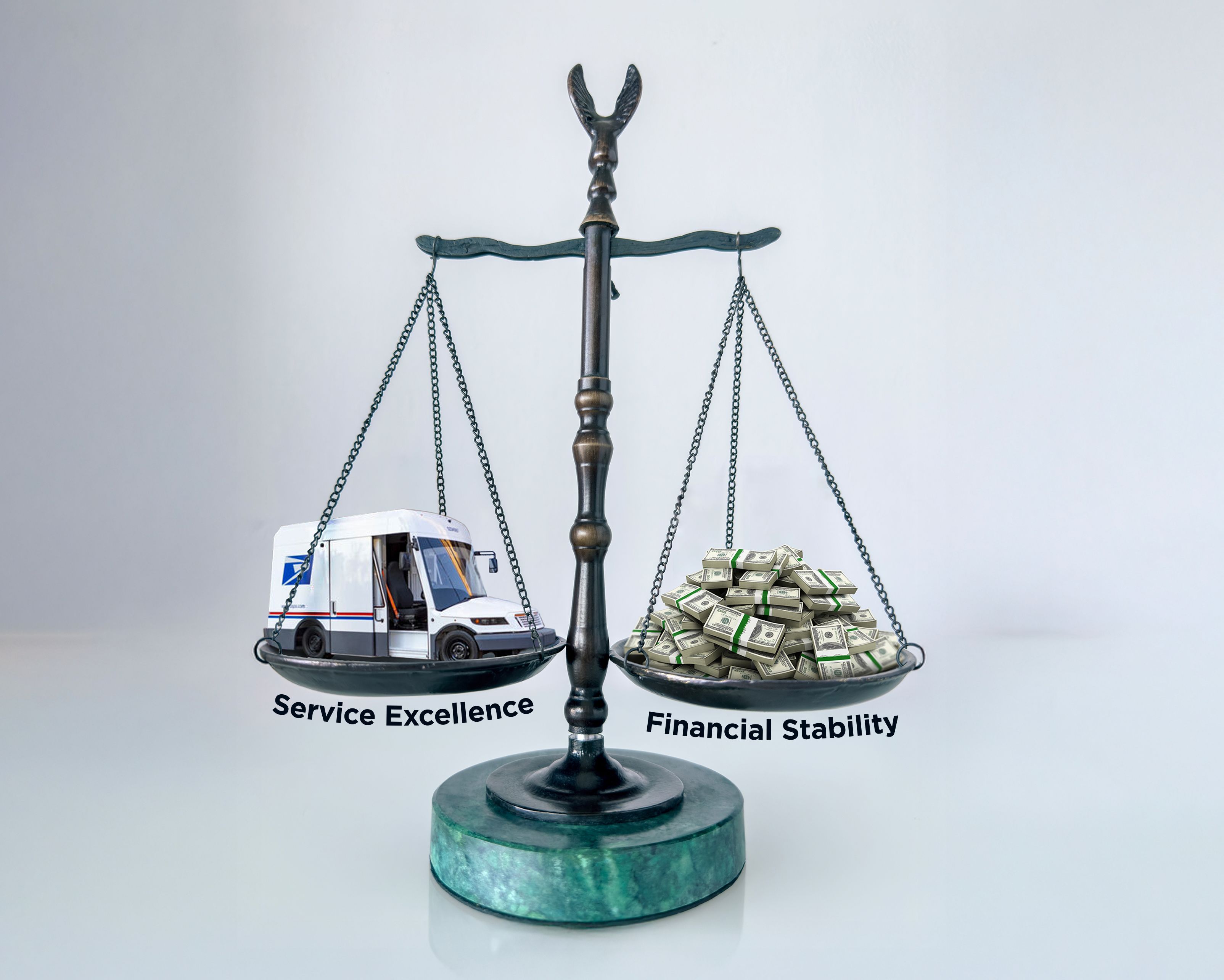

This is the third volume in our series of reviews of the Postal Service's implementation of its Delivering for America (DFA) plan, found in A Vision and Ten-Year Plan to Achieve Financial Sustainability and Service Excellence and 2.0 Fulfilling the Promise.
This report focuses on two core areas outlined in the DFA plan: achieving service excellence and attaining financial stability. The Postal Service completed some key initiatives in these areas, as outlined in the following timeline.


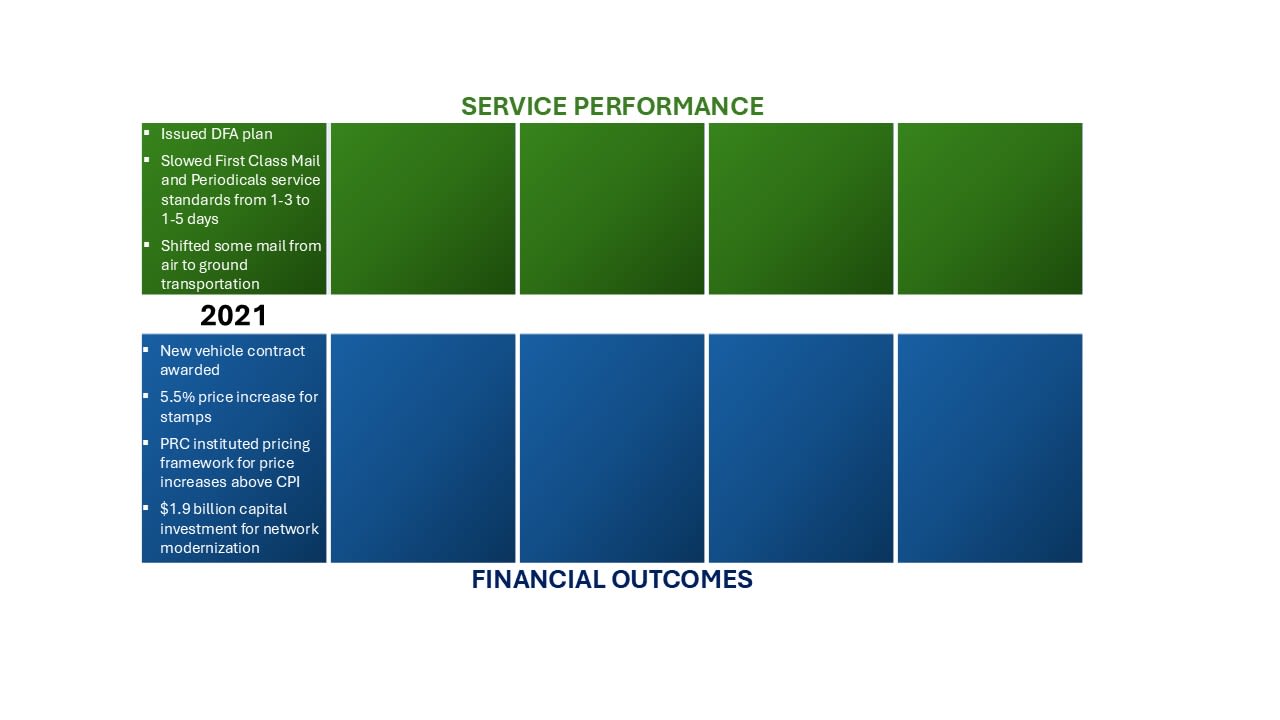

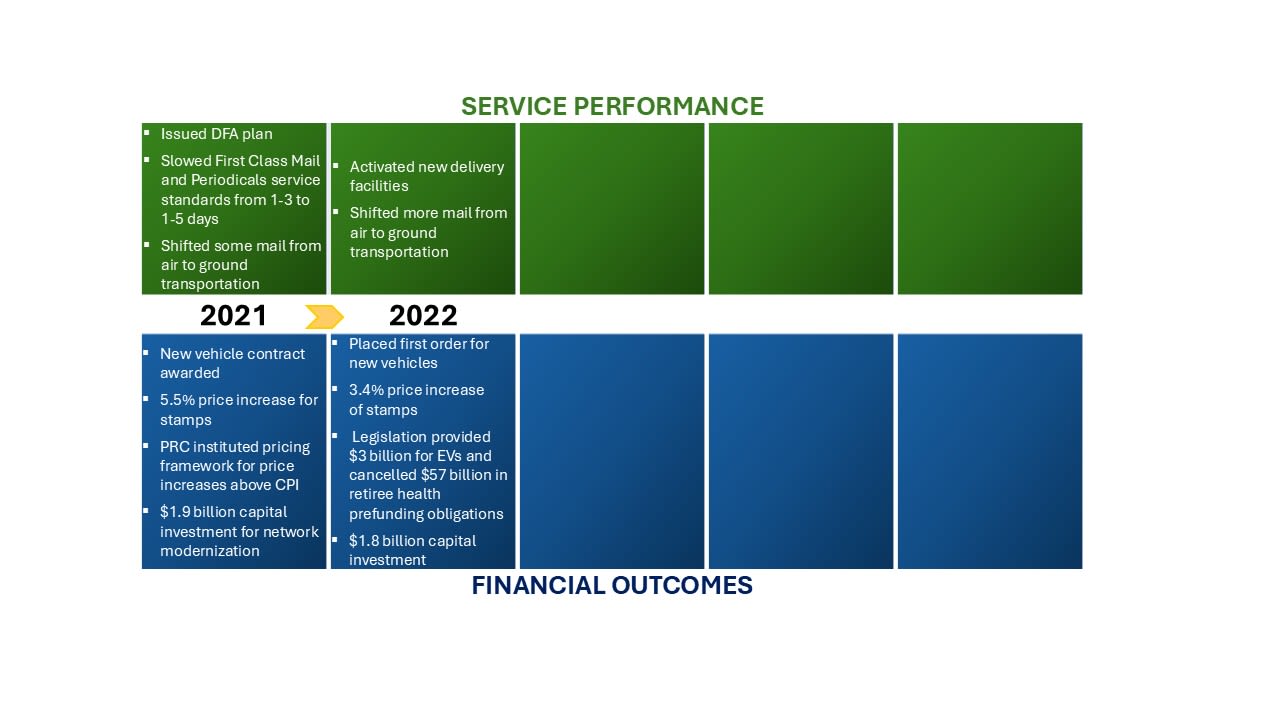

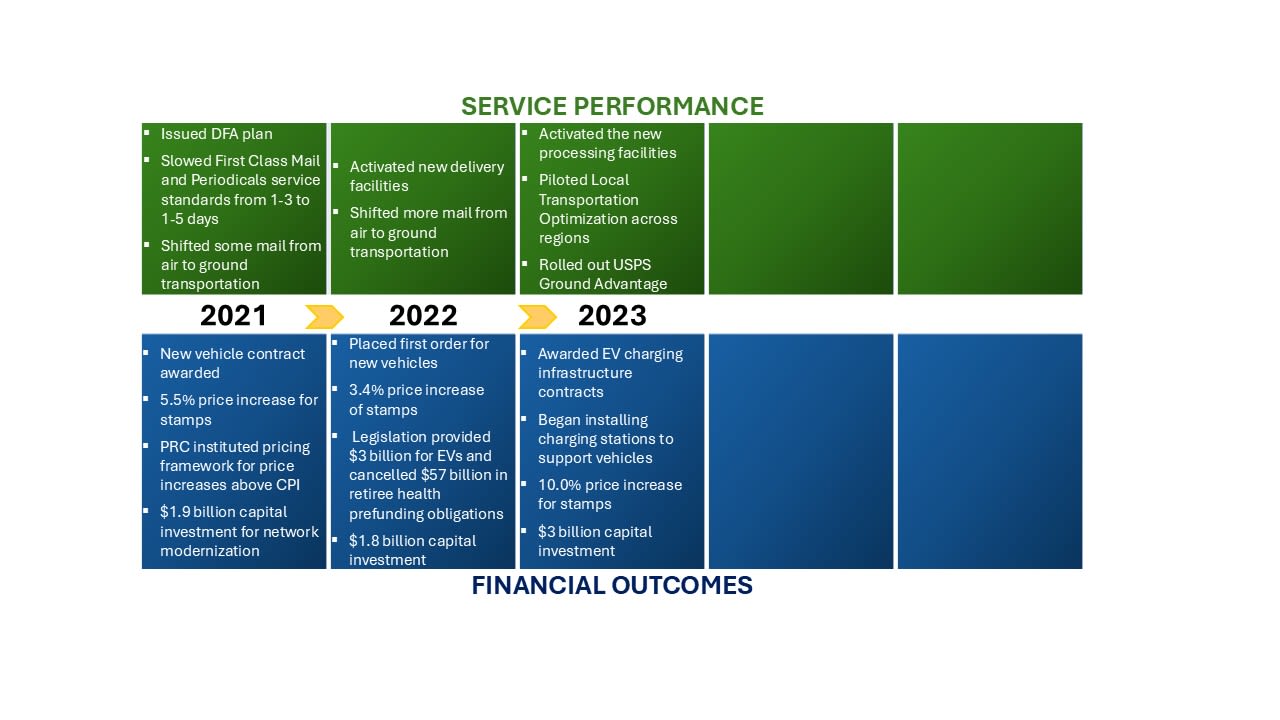

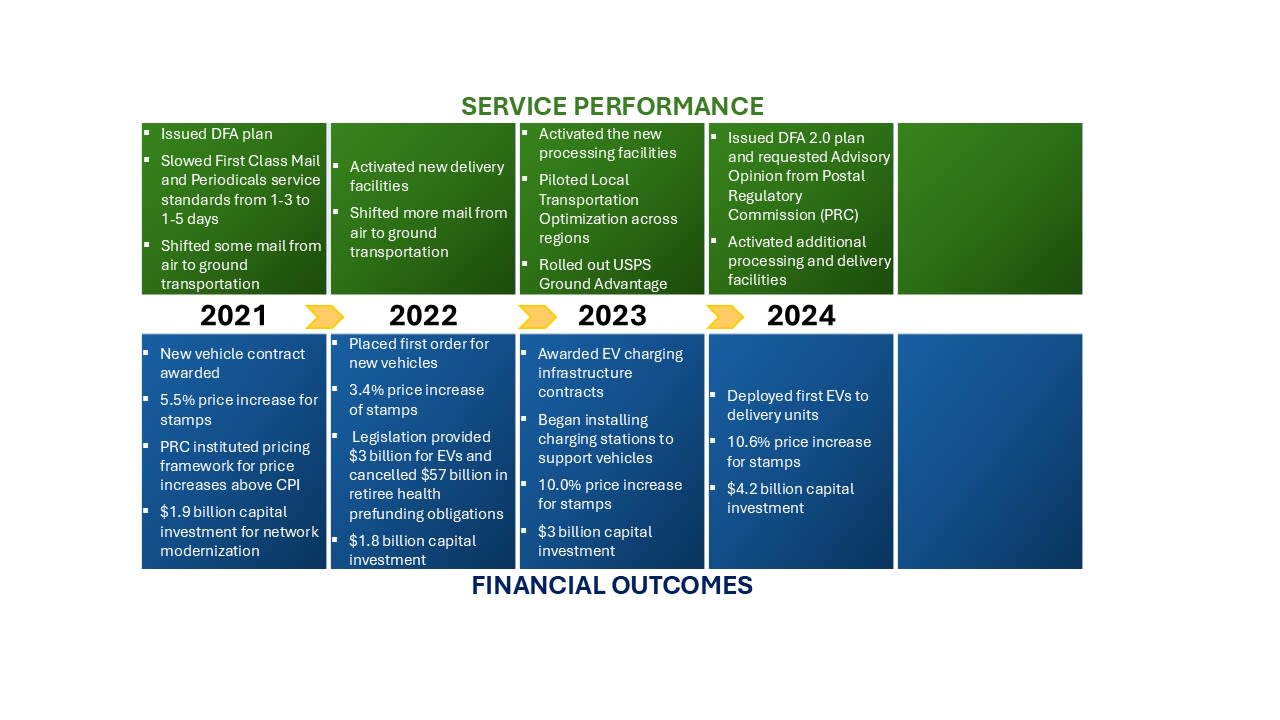

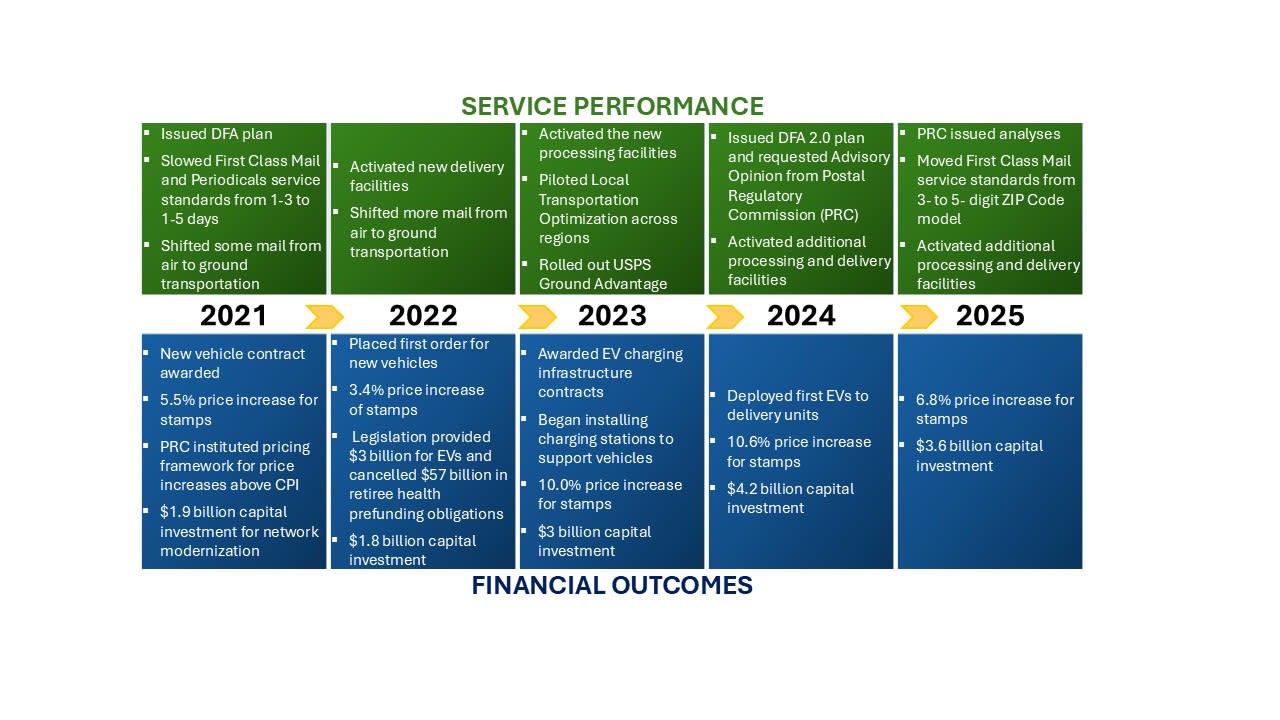
Overall, our analysis of the Postal Service's progress toward key initiatives shows mixed results. It has made meaningful investments in infrastructure, taken steps toward fleet modernization, and made pricing reforms. However, service performance has been inconsistent, and financial outcomes have fallen far short of break even targets.
Service Performance
The Postal Service developed key strategies in its DFA plan to transform its mail processing and delivery facilities, the transportation network, and its service goals.
Network Modernization
To address operational and logistical inefficiencies, the Postal Service consolidated some facilities and opened others, moving processing operations to a hub and spoke model.
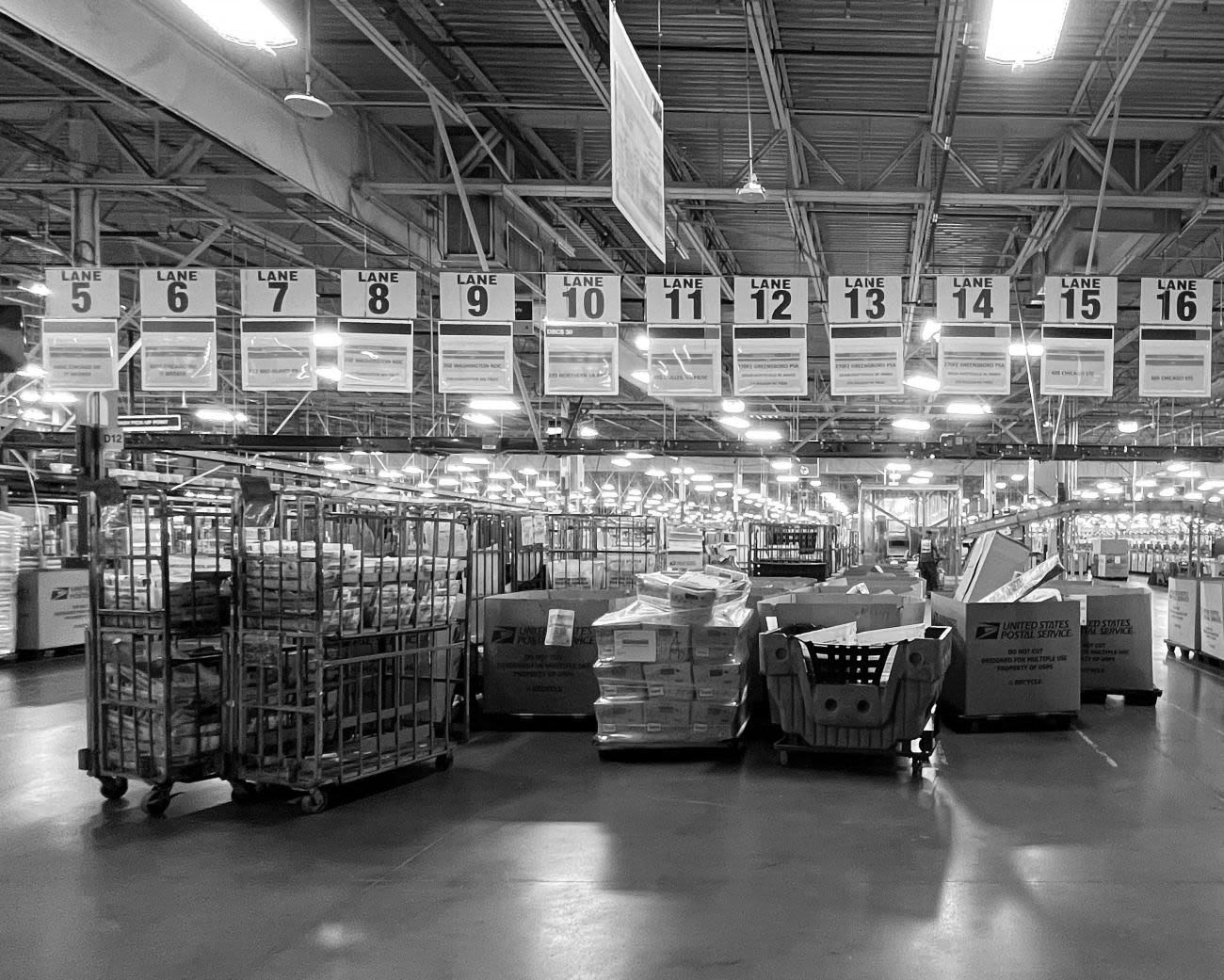
The progress of facility rollout is reflective of the Postal Service’s successes and challenges. As of mid-2025, the Postal Service opened 13 of 60 planned regional processing and distribution centers (RPDCs) and 58 of 190 planned local processing centers (LPCs), some of which have been plagued by unexpected gridlock and challenges with expansive, high-cost Matrix Regional Sorter machines.
The Postal Service’s rollout of sorting and delivery centers (S&DCs) has been more positive, deploying 101 of 150 planned S&DCs, with opportunities to adjust operations for rural routes.

Transportation
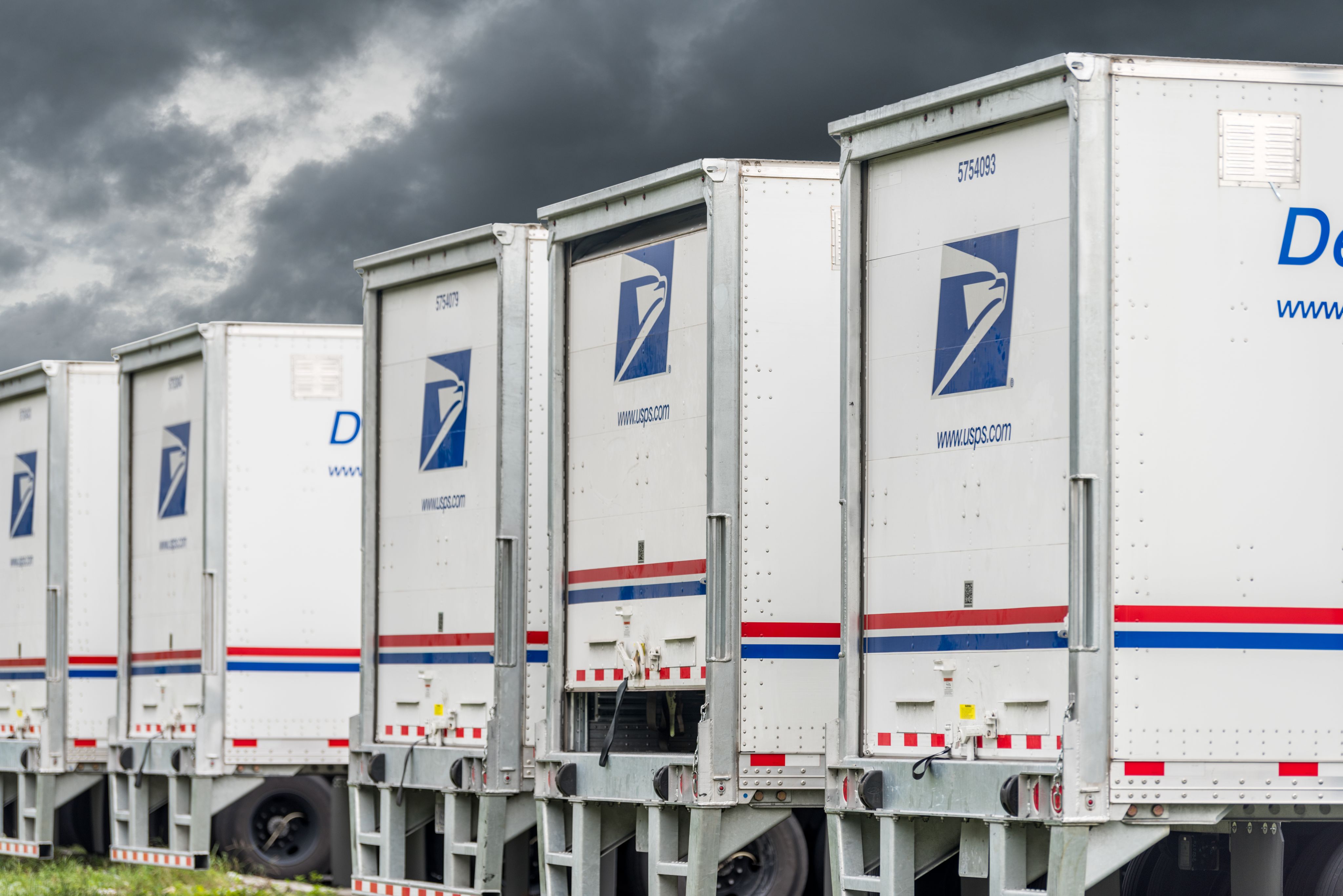
While transportation changes have saved the Postal Service money, they have also slowed service.
The Postal Service reduced mail traveling by air and introduced a new package product to capitalize on its use of ground transportation.
It reduced trips for rural customers via its Local Transportation Optimization initiative, which it expanded to 158 out of 165 planned regions via its Regional Transportation Optimization initiative.
Overall, Postal Service customers saw slower delivery speeds with transportation changes.

Service
Adjusting Service expectations has enabled changes to the processing and transportation network. The Postal Service:
- Extended delivery window for First-Class Mail and Flats to from a 1-to-3-day standard to 1-to-5 days.
- Modified service standards to a more granular 5-digit ZIP Code model.
The expanded delivery window did not negatively impact the 2024 general election, where it exceeded Election and Political Mail targets, but 2024’s peak holiday season saw service lag times.

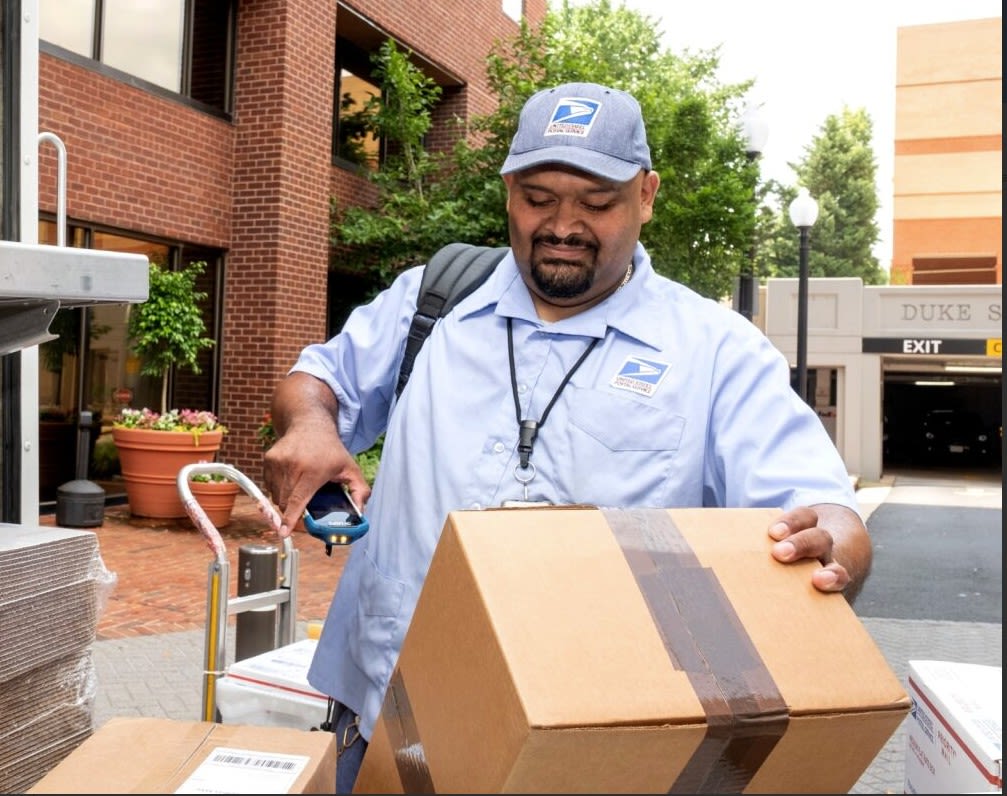
In the short term, these efforts have brought trade-offs, such as slower service, missed targets, and a network still in transition. Recognizing these challenges, the new postmaster general has emphasized the importance of service and the need to continue modernization, ensuring that transformation delivers not only cost savings but also reliable service for the American public.
Financial Stability
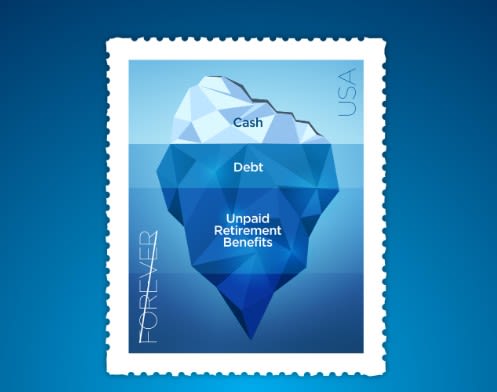
Over the last few decades, insufficient capital investment, the steady decline of mail volume, the substantial liability of health and retirement benefit programs, and an increasingly expensive universal service obligation have strained the Postal Service’s financial sustainability.
Investing in the Future - Vehicles & Workforce
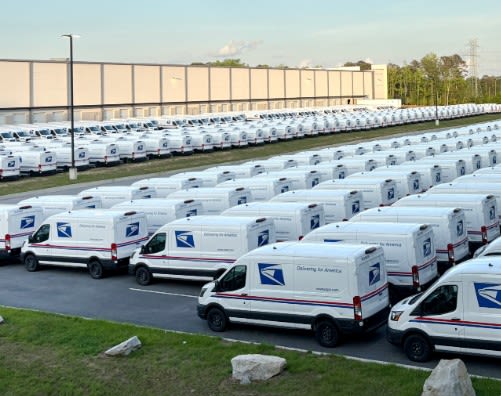
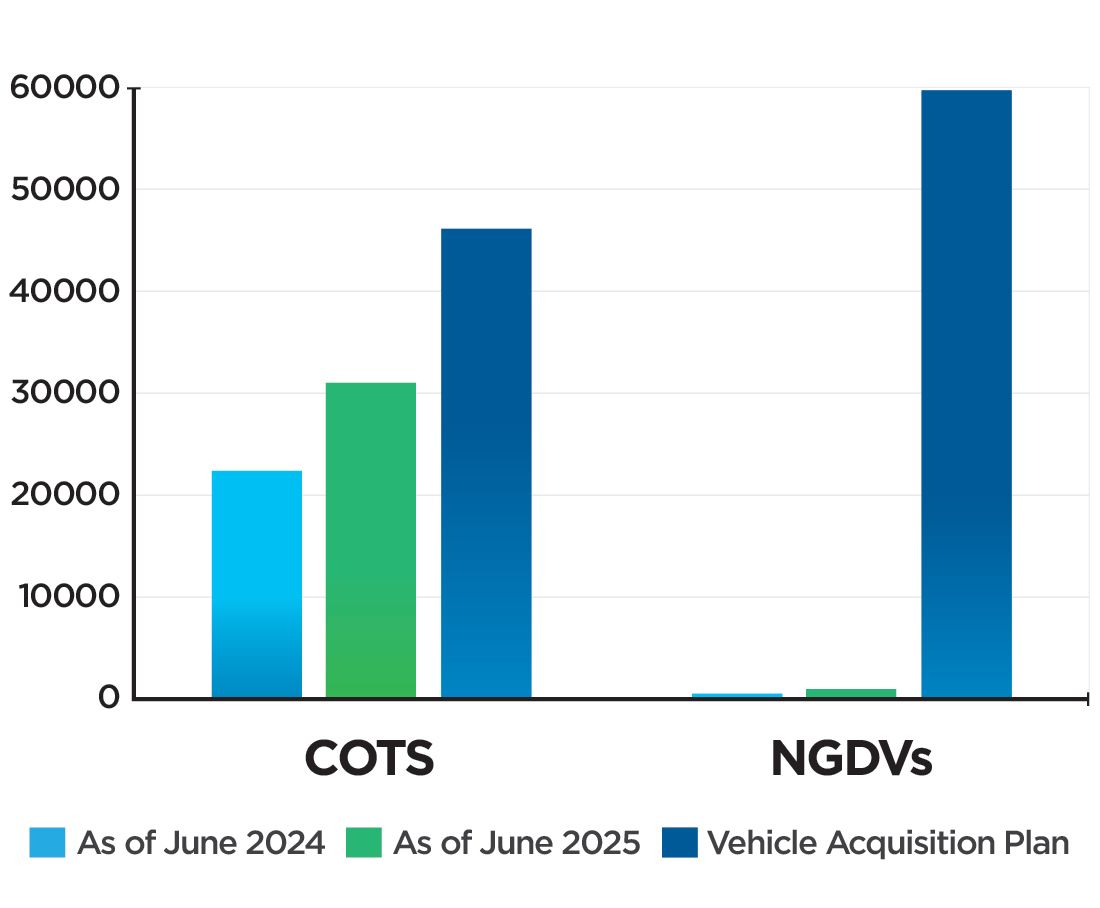
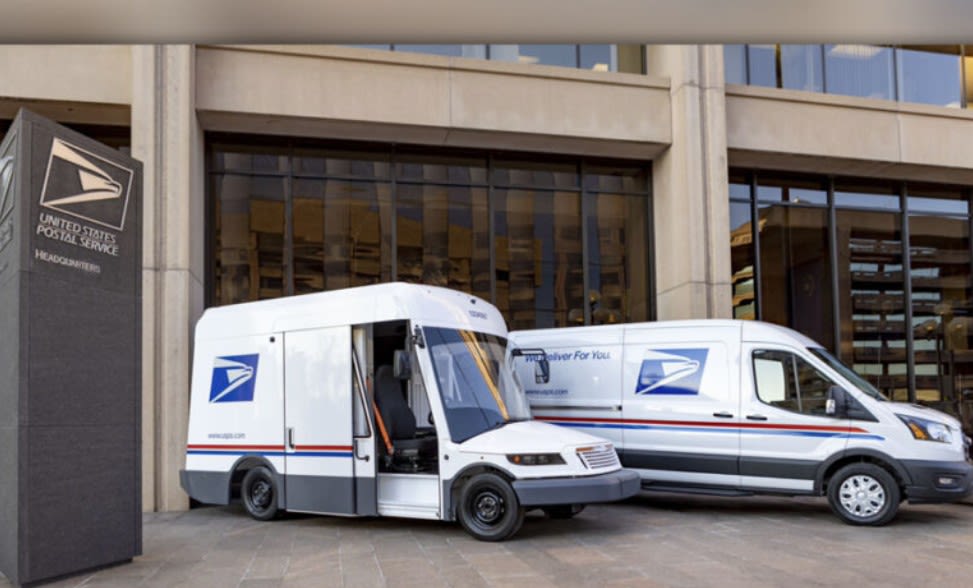
The Postal Service’s is in the process of buying specialty-made Next Generation Delivery Vehicles (NGDV) over 10 years, while also continuing to use and purchase commercial-off-the-shelf (COTS) vehicles. The progression of the acquisition plan is shown below:


The Postal Service continued efforts to stabilize and right size its workforce. It:
- Converted about 286,000 pre-career employees to career.
- Reduced more than 28 million mail processing facilities workhours (but missed targets by 10.8 million hours).
- Reduced total overtime hours from 172.9 million to 117.8 million.

Raising Revenue
In Fiscal Year (FY) 2021, the Postal Regulatory Commission (PRC) authorized the Postal Service to raise prices. Stamp prices rose annually between 3.4 percent and 10.6 percent from FY 2021 through 2024.
To continue growth of Competitive volume, the Postal Service introduced USPS Ground Advantage, an affordable package shipping option. It helped alleviate the decline of the COVID-19 package surplus and the decrease of Priority Mail volume.
However, the revenue raised did not fully offset the historically high inflation on expenses.


Legislative Changes
The Postal Service Reform Act, passed in April 2022, provided some financial relief for the Postal Service. It eliminated required prefunding of retiree healthcare costs and integrated Medicare more fully into the retiree healthcare program, but the Postal Service is responsible for funding retiree healthcare costs as they are incurred.


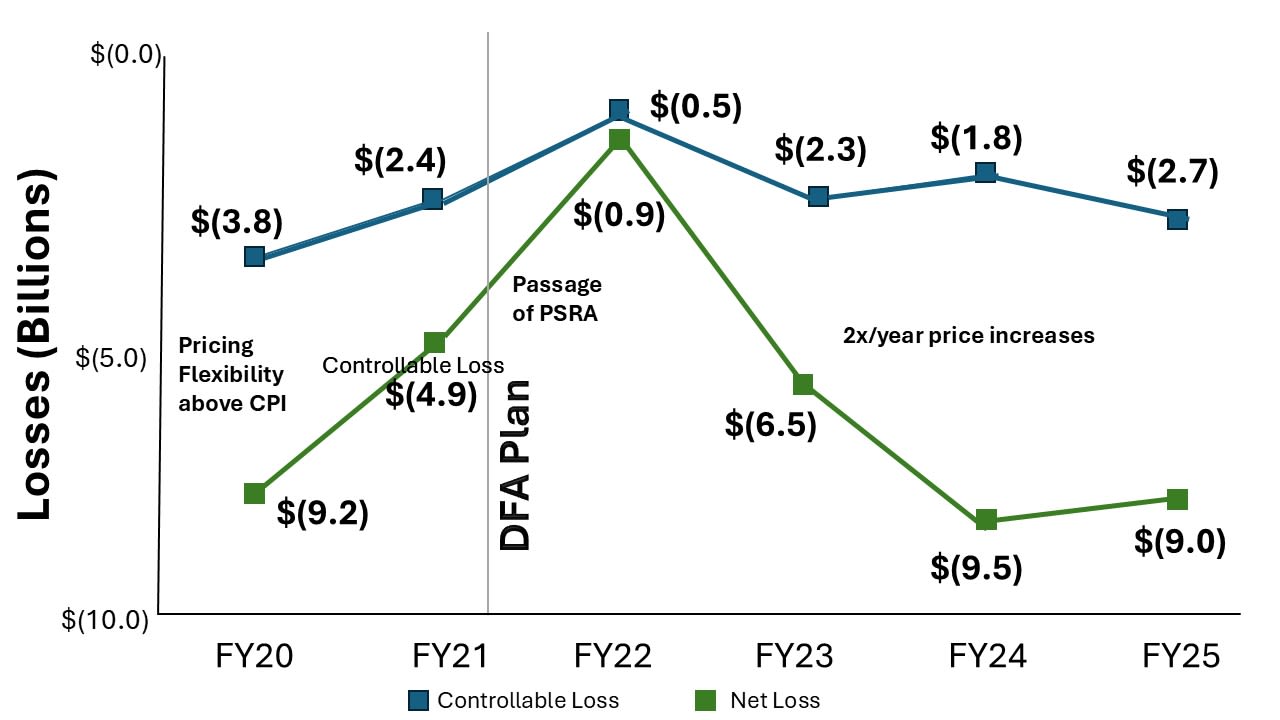
The Postal Service sought to break even by FY 2023, but due to the impacts of high inflation on labor and the inability to achieve reform on its Civil Service Retirement System (CSRS) pension obligations, it readjusted the goal to break even by FY 2030. Meeting this goal will be extraordinarily challenging.
The Postal Service’s preferred method for analyzing its financial condition is its controllable income or loss. As seen to the left, the difference between controllable losses and net losses from operations is significant, demonstrating at least in part, the financial impacts associated with required participation in federal retirement and workers compensation programs.
Conclusion
Some of the initiatives introduced by the Postal Service have successfully reduced costs and improved efficiencies. In addition, legislative reforms have yielded some benefits. Yet persistent service performance issues, cost overruns, and delayed implementation of key initiatives continue to challenge its ability to reach the ultimate goals of the DFA. Stakeholders will be looking for assurances that further DFA implementation will result in critical financial sustainability for the future, as the Postal Service is about halfway through the plan's implementation timeline.